What should users do after kraken mirror scam?
A Kraken mirror scam can be convincing because a fraudulent website may copy the appearance, branding, login screens, and general layout of a legitimate cryptocurrency platform. The purpose is usually to make visitors believe they are using the real service when they are actually interacting with an unauthorized website. 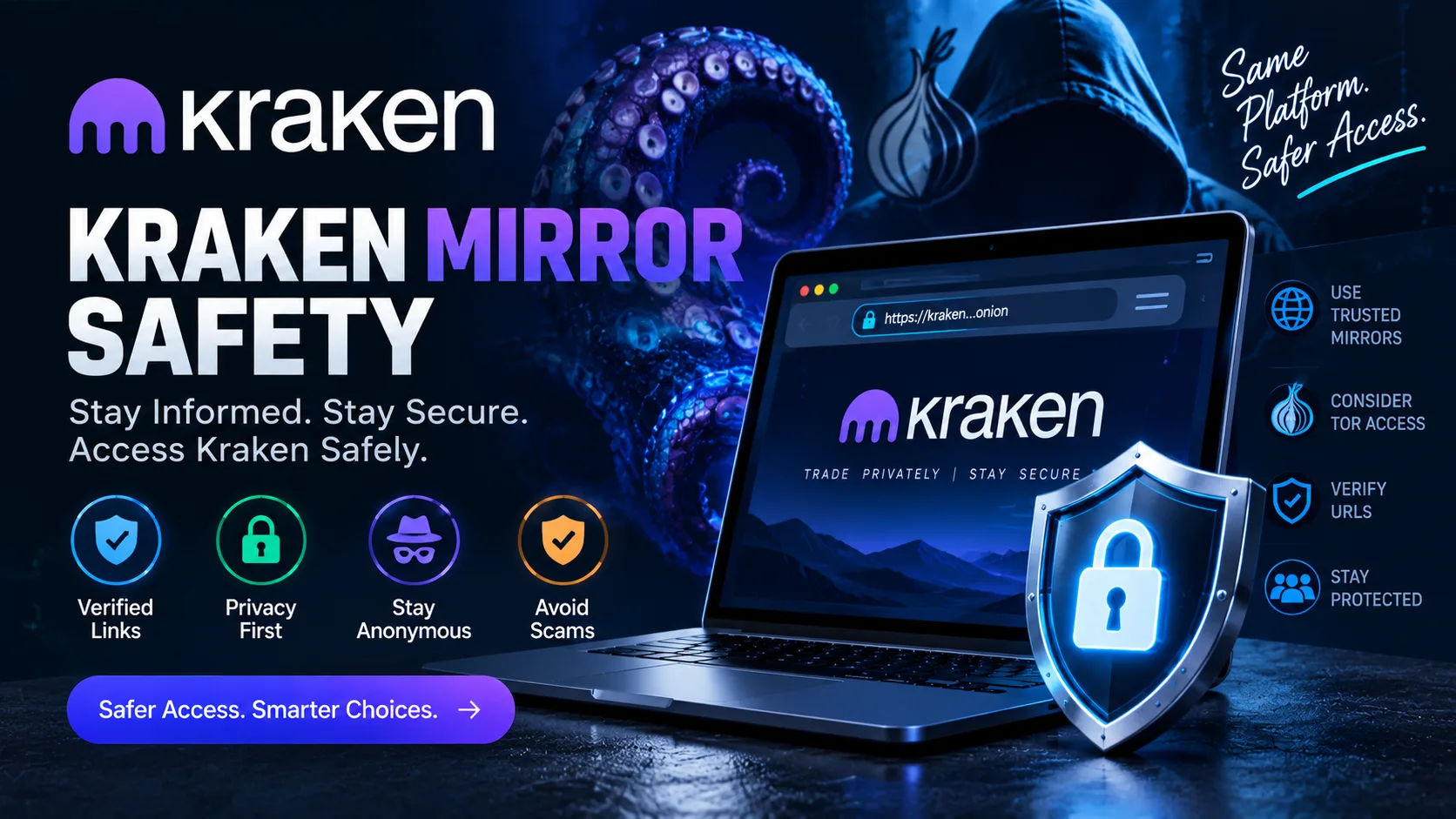 If you have visited one, entered information, connected a wallet, or sent funds, taking quick and careful action is important. Kraken mirror safety мошенничество с зеркалом Kraken should be treated as a practical security issue rather than something to ignore after closing the browser.
A mirror scam may be promoted through search results, advertisements, social media posts, messages, emails, or links shared in online communities. Some fraudulent pages are designed to collect usernames and passwords, while others may attempt to obtain verification codes, recovery information, payment details, or cryptocurrency. The exact danger depends on what information or access was provided.
This guide explains what users should do after encountering a Kraken mirror scam. It covers immediate steps, account protection, device security, cryptocurrency transactions, evidence collection, reporting, and ways to reduce the risk of another incident.
What Is a Kraken Mirror Scam?
A mirror scam is a fraudulent website that imitates a legitimate website. The word “mirror” refers to the way the fake page may reproduce the visual appearance of the genuine service.
The copied page might contain familiar colors, logos, buttons, menus, and login fields. A user who is in a hurry may not notice that the web address is different.
The scammer's objective can vary. In some cases, the website simply collects credentials. In other cases, it may attempt to persuade users to download software, provide sensitive information, transfer cryptocurrency, or approve a transaction.
The important point is that a convincing appearance does not establish authenticity.
What Should You Do Immediately?
Leave the Suspicious Website
If the website is still open, close it.
Do not continue clicking buttons to investigate the page. Do not enter additional information, download files, or follow instructions shown by the suspicious website.
If the site displays a warning claiming that your account is locked or that you must act immediately, do not allow that message to pressure you into making a rushed decision.
Stop Entering Information
If you realize that the website is suspicious while completing a form, stop immediately.
Do not provide additional passwords, authentication codes, recovery phrases, identification information, payment information, or other private details.
If you already submitted something, assume that the information may have been exposed and begin the appropriate account-protection steps.
Do Not Return Through the Same Link
Avoid reopening the suspicious URL to check whether it is legitimate.
Instead, independently navigate to the official Kraken service using a trusted route. You can type the address yourself or use a previously trusted bookmark rather than clicking the link that originally brought you to the questionable website.
Secure Your Kraken Account
If you entered your Kraken password into a suspected mirror site, changing that password should be treated as an important priority.
Use the legitimate Kraken website or official application, not the suspicious page.
Choose a new password that is unique and has not been used for another account. Reusing the same password across services increases the potential impact of a credential theft incident.
If the same password was used on other websites, change those passwords as well, especially for email, financial, cloud-storage, and other accounts that could be used to reset or access important services.
Review Account Activity
After accessing your legitimate account, carefully review recent activity.
Look for unfamiliar logins, changes to account settings, withdrawals, transfers, payment activity, or other actions that you do not recognize.
Pay particular attention to security settings. An attacker who obtains credentials may attempt to change account information or establish another method of maintaining access.
If you see unauthorized activity, contact Kraken through its official support channels and explain what happened.
Strengthen Authentication
Multi-factor authentication can provide another layer of protection.
If your account supports stronger authentication options, review the available settings and enable an appropriate method through the legitimate service.
Do not enter authentication codes into a suspicious website simply because it claims that the code is required to complete a login.
A stolen password combined with a captured authentication code can create a substantially more serious account-security problem.
Protect Your Email Account
Your email account is particularly important because it may be connected to password-reset processes.
If you entered your email password into a fake website, change it immediately through the legitimate email provider.
Review recent sign-ins and account-recovery settings. Look for unfamiliar devices, forwarding rules, recovery addresses, phone numbers, or other changes.
Make sure your email account uses a strong, unique password and appropriate multi-factor authentication.
If an attacker controls your email account, they may attempt to reset passwords for other services. That is why securing email should be part of the response rather than focusing only on the cryptocurrency account.
What If You Entered an Authentication Code?
Users sometimes believe that a password is the only sensitive information that matters. That is not necessarily true.
If you entered a one-time authentication code into a suspected scam website, treat the situation seriously.
The attacker may have been attempting to use the code in real time. Depending on the authentication method and account configuration, the code could potentially help them complete an unauthorized login or action.
Access your account independently through the legitimate service and review security activity immediately.
If anything appears unfamiliar, contact official support and provide the relevant details.
Never share additional authentication codes with someone who contacts you claiming to be support.
What If You Sent Cryptocurrency?
A cryptocurrency transfer requires a different response from a stolen password.
If you voluntarily sent cryptocurrency to an address controlled by a scammer, record the transaction information immediately.
Save the transaction ID, receiving address, amount, cryptocurrency type, date, and approximate time.
Do not delete messages, emails, or other information connected with the transaction.
Contact the legitimate exchange or wallet provider through its official support process. Explain that the transaction was connected to a suspected scam.
Cryptocurrency transactions can be difficult or impossible to reverse after they are confirmed, so users should avoid anyone who promises guaranteed recovery in exchange for an upfront payment.
Beware of Recovery Scams
After reporting a cryptocurrency scam, some victims become targets for a second scam.
A person may contact you claiming to be a recovery specialist, security investigator, government representative, exchange employee, or blockchain expert.
They may promise to recover lost funds if you pay a fee or provide additional account information.
This can become another attempt to steal money or credentials.
Be especially cautious when someone asks for a recovery phrase, private key, password, authentication code, remote computer access, or payment before supposedly recovering funds.
Legitimate support should be independently verified through official channels.
Check Your Device for Suspicious Software
Not every mirror scam installs malware, but users should consider what happened during the visit.
If you downloaded a file, browser extension, application, or other software from the suspicious website, do not assume that it is safe.
Run an updated security scan on the device.
Review recently installed applications and browser extensions. Remove anything you do not recognize, provided you can do so safely.
If the suspicious website instructed you to install remote-access software, treat that as especially important. Remote-access tools can give another person the ability to interact with a computer.
In a serious compromise, consider using a separate trusted device to change important passwords and secure financial accounts.
Clear Suspicious Browser Data
Removing browsing data does not undo information that may already have been submitted, but it can still be useful as part of general cleanup.
Clear the suspicious site's cookies and stored site data.
Review browser extensions and notification permissions.
Some malicious websites attempt to persuade users to allow browser notifications. If you granted permission, remove that permission through the browser's legitimate settings.
Avoid installing security software recommended by the suspicious website itself.
Preserve Evidence
Before deleting everything associated with the incident, preserve useful evidence.
Take screenshots of the suspicious website if it is safe to do so.
Save the URL, emails, text messages, advertisements, usernames, wallet addresses, transaction IDs, and other relevant information.
Record when you encountered the website and what information you entered.
This evidence may help the exchange, hosting provider, browser service, financial institution, or appropriate authorities understand what happened.
Do not revisit a dangerous website merely to obtain additional evidence if you already have enough information.
Report the Scam
Reporting a fraudulent website can help security teams investigate abuse.
If the scam arrived through email, use the email provider's phishing-reporting mechanism.
If it appeared through a social platform, use that platform's reporting system.
If it was promoted through an advertisement or search result, report the advertisement or suspicious result to the relevant provider.
If money or cryptocurrency was lost, consider reporting the incident to the appropriate financial-crime or law-enforcement authority in your jurisdiction.
When making a report, provide factual information rather than assumptions. Include the suspicious address, dates, screenshots, transaction details, and the method through which you encountered the scam.
Contact Your Bank or Payment Provider
If you entered card details or banking information into the suspicious website, contact the relevant financial institution promptly.
Explain that the information may have been exposed through a fraudulent website.
The institution can tell you what protective measures are appropriate for your account.
Monitor statements for transactions you do not recognize.
Do not wait for a suspicious charge to appear before taking action if sensitive payment information has already been submitted.
Review Other Online Accounts
Credential theft can affect more than the account that was targeted.
If you reused the same password elsewhere, change it.
Prioritize accounts that contain financial information, personal documents, communication records, or password-recovery capabilities.
Use separate passwords for important services.
A password manager can make this easier because it can generate and store unique passwords without requiring you to remember every one.
Learn to Recognize Future Mirror Scams
One of the most useful lessons after a phishing incident is learning how the deception worked.
Examine the Domain Carefully
A fake website may use a domain that resembles a legitimate name but contains additional words, unusual characters, altered spelling, or a different domain ending.
Do not judge a website solely by its logo or page design.
The actual domain is much more important.
Be Careful With Search Advertisements
Scammers may use advertisements or search-engine results to make a fraudulent website appear trustworthy.
Instead of clicking an unfamiliar advertisement for an exchange, navigate independently to the service.
Treat Urgent Messages Carefully
Statements such as “your account will be closed,” “withdrawals are suspended,” or “verify immediately” can create panic.
Urgency is often used to discourage careful verification.
Take a moment to independently confirm the message through the official service.
Never Share Recovery Information
Recovery phrases and private keys are extremely sensitive.
A legitimate website should not require users to reveal a private wallet recovery phrase merely to “verify” an account.
If a page asks for such information unexpectedly, stop.
How Users Can Create Better Kraken Site Safety Habits
Good Kraken mirror safety мошенничество с зеркалом Kraken practices are based on verification rather than appearance.
Before signing in, verify that you are using the legitimate service.
Use bookmarks for frequently visited financial websites.
Keep your operating system, browser, and security software updated.
Enable appropriate account-security features.
Avoid clicking cryptocurrency-related links received through unexpected messages.
Most importantly, never allow urgency to replace verification.
What Not to Do After a Mirror Scam
Do not keep communicating with the scammer.
Do not send additional cryptocurrency because someone claims it will unlock or recover your account.
Do not provide another authentication code.
Do not download software recommended by an unknown person.
Do not trust people who promise guaranteed fund recovery.
Do not assume that closing the browser automatically means the account is safe.
Do not ignore suspicious activity after entering credentials.
These mistakes can turn a single phishing attempt into a larger security incident.
A Simple Response Checklist
If you believe you interacted with a Kraken mirror scam, use this sequence:
- Close the suspicious website.
- Stop entering information.
- Access the legitimate service independently.
- Change any exposed password.
- Change reused passwords elsewhere.
- Secure your email account.
- Review account activity and security settings.
- Strengthen multi-factor authentication.
- Check the device for suspicious downloads or extensions.
- Contact legitimate support if account activity is unauthorized.
- Contact your bank if financial information was exposed.
- Save transaction IDs and other evidence.
- Report the fraudulent website and associated messages.
- Watch your accounts for unusual activity.
The exact steps can vary depending on what information was exposed.
Conclusion
A Kraken mirror scam should be handled as a potential security incident, even if the user notices the deception quickly. The correct response depends largely on what happened. Someone who only opened a suspicious page has a different risk profile from someone who entered a password, submitted an authentication code, installed software, or transferred cryptocurrency.
The most important principle of Kraken mirror safety мошенничество с зеркалом Kraken is to avoid making the situation worse. Stop interacting with the suspicious website, independently access legitimate services, secure exposed accounts, and preserve evidence.
If credentials were entered, change them through legitimate services. If cryptocurrency was transferred, record the transaction details and contact the relevant provider. If financial information was exposed, notify the financial institution. If software was downloaded, examine the device carefully.
Users should also remain cautious after the original incident because scammers sometimes target victims with fake recovery offers. A promise to recover cryptocurrency is not proof that someone is legitimate.
Future protection comes from slowing down, checking domains carefully, avoiding unexpected links, using strong unique passwords, and enabling appropriate authentication methods. A professional-looking website can be copied, but careful verification makes it much harder for a fraudulent mirror to succeed.