
Perm Magnetized Separator Vs. Eddy Flow Separator: Key Differences Uses
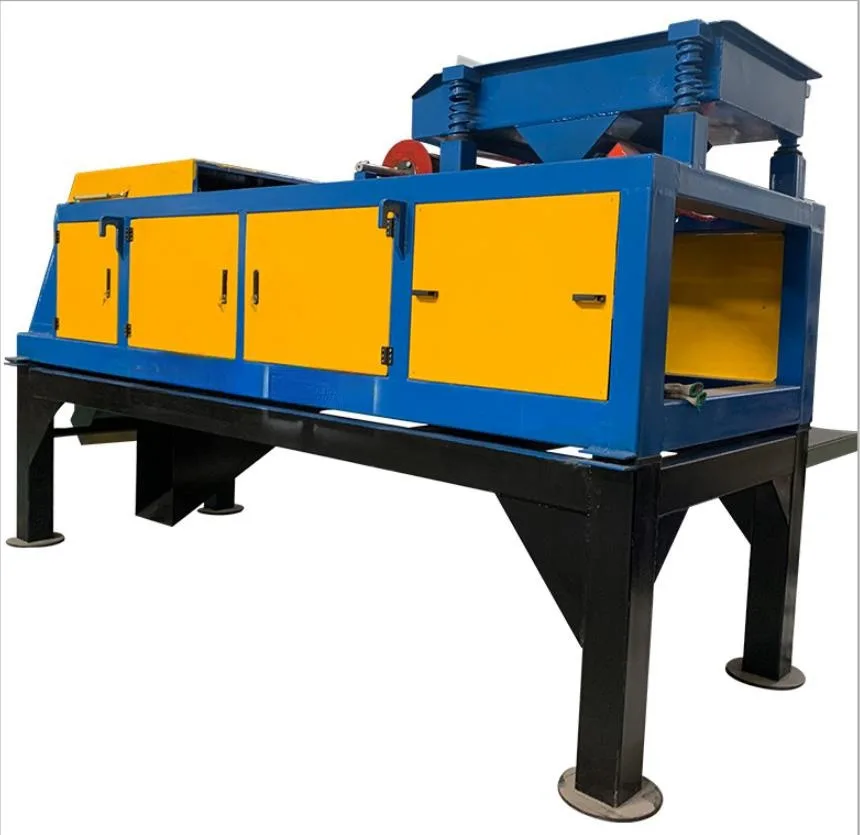
When it comes to separating unwanted materials from a variety of substances, industries often turn to magnetised and eddy flow separators. These machines are obligatory in recycling, mining, run off management, and many other sectors. While both separators partake the park goal of stuff legal separation, they run based on different principles and are suitable to different applications. This article explores the key differences between Permanent Mineral Processing Equipment Solutions (PMS) and Eddy Current Separators(ECS), their operative mechanisms, and the types of materials they are best suited for.
Understanding Permanent Magnetic Separators(PMS)
A Permanent Magnetic Separator uses a attracter to attract ferric metals, such as iron and nerve, from a flow of stuff. The core feature of these separators is the use of a perm attractor to create a attractable arena. Unlike electromagnets, permanent wave magnets do not require an world power seed to return the attractable domain.
How It Works:
- The stuff flow passes through the attractable orbit generated by the permanent attracter.
- Ferrous materials are attracted to the attractor, while non-ferrous materials are allowed to pass through.
- Once the ferrous material sticks to the attracter, it is removed from the flow, typically via a natural philosophy system of rules like a belt or drum.
Common Applications of PMS:
- Recycling: PMS is widely used in the recycling manufacture to separate ferric materials from integrated run off, including plastics and wallpaper.
- Mining: It is used in the minelaying industry to part ferrous metals from unsmooth ore.
- Food Processing: In the food industry, PMS can help remove metal contaminants from bulk food products.
Understanding Eddy Current Separators(ECS)
Eddy Current Separators, on the other hand, work on a entirely different rule. They utilize the physics of evoked electric car currents to part non-ferrous metals from a stuff stream. The extractor uses a rotating drum with a magnetised domain to make an electric flow in the stuff being refined.
How It Works:
- ECS operates by inducement an electric car current in non-ferrous metals like Al, copper, and plaque as they pass over a rotating magnetic drum.
- The magnetized field causes the evoked currents(known as eddy currents) to produce their own magnetised area, which repels non-ferrous metals away from the stuff well out.
- Non-metallic materials or ferrous metals are not plummy by the eddy flow and continue in the flow, while non-ferrous metals are ejected by the wedge of the repulsion.
Common Applications of ECS:
- Recycling: ECS is extensively used to part aluminum and other non-ferrous metals from run off streams such as interracial plastics, , and metals.
- Waste Management: It is unremarkably used in separating aluminium cans, copper wires, and other non-ferrous materials in assemblage and industrial waste recycling.
- Electronics Recycling: ECS is nonesuch for separating worthy non-ferrous metals from physics waste like circuit boards.
Key Differences Between Permanent Magnetic Separators and Eddy Current Separators
-
Operating Principle:
- PMS operates using a atmospheric static magnetised arena generated by a permanent attracter to pull ferrous metals.
- ECS uses a rotating magnetised area to hasten eddy currents in non-ferrous metals, causation them to be repelled away from the material flow.
-
Types of Materials Separated:
- PMS is studied to split ferrous metals like iron and nerve.
- ECS is specifically used to separate non-ferrous metals like aluminum, copper, and memorial tablet.
-
Magnetic Field Source:
- PMS uses a permanent wave attractive feature, which does not need major power to run.
- ECS uses a rotating drum with a high-frequency cyclic flow to generate its attractable area.
-
Applications:
- PMS is best right for industries needing to transfer ferrous taint, such as recycling, mining, and food processing.
- ECS is saint for applications requiring the separation of non-ferrous metals, such as aluminium, in recycling, run off management, and retrieval.
-
Energy Efficiency:
- PMS is more energy-efficient as it doesn’t require for generating the magnetised field, making it a cost-effective solution for ferric metal legal separation.
- ECS requires an electrical cater to return its rotating magnetised field and thus uses more vitality than PMS.
-
Maintenance:
- PMS generally requires less sustainment due to the simple mindedness of the permanent wave magnet, which doesn't wear out or need major power supply.
- ECS requires more upkee, particularly in the rotating components, and its electrical components can demean over time.
Choosing the Right Separator: Which One Should You Use?
The decision between a Permanent Magnetic Separator and an Eddy Current Separator largely depends on the type of materials you need to split and the specific requirements of your surgical operation.
-
Use a Permanent Magnetic Separator when:
- You need to remove metallic element metals from a material well out.
- You need an vitality-efficient solution for metallic element stuff separation.
- Your surgery involves recycling, mining, or food processing.
-
Use an Eddy Current Separator when:
- You need to retrieve non-ferrous metals like atomic number 13, , or plaque.
- Your process involves recycling of interracial metals or waste materials, such as in the municipal solid waste manufacture.
- You are encumbered in electronics or atomic number 13 can recycling.
Conclusion
While both Permanent Magnetic Separators and Eddy Current Separators play material roles in stuff separation across various industries, their differences in operating principles, vitality utilisation, and material treatment make them suitable for different applications. By understanding their key characteristics and the materials they best wield, industries can choose the separator that best meets their needs for , cost-effectiveness, and environmental sustainability.